DM Automation for the Moments That Matter in Your Marketing Funnel
January 28, 2026
How to turn social engagement into real conversations and customers when intent is highest and timing matters most
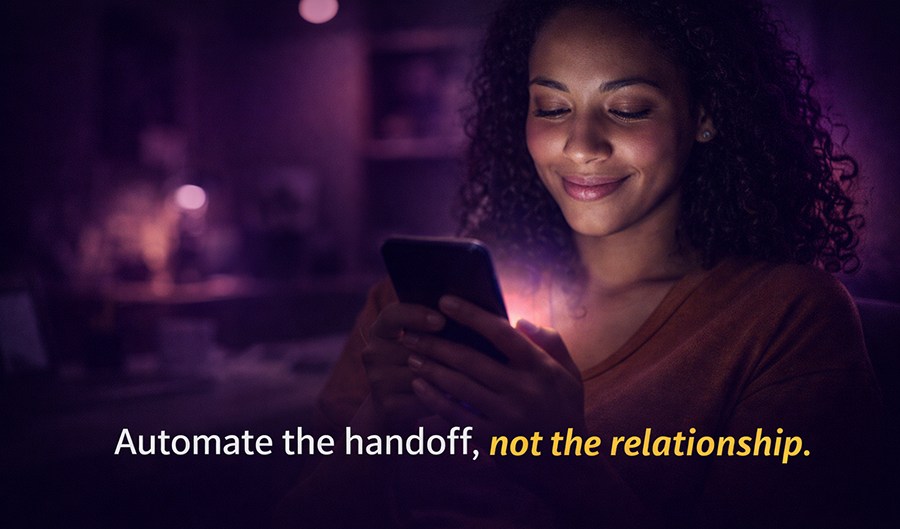
Most brands treat DMs as customer service. Smart brands use them to capture intent at the top of the funnel and convert it at the bottom without breaking the conversation in between.
Here’s how to use direct messaging to support awareness, preserve context during consideration, and convert when intent is highest, without losing the human touch.
The Problem With Most DM Strategies
Social media marketing has a dirty secret: most engagement goes nowhere.
Someone comments on your post. You might reply. They might reply back. Then... nothing. That potential customer disappears into the algorithm, and you're left wondering why your 10K followers aren't translating to sales.
The gap isn't engagement, it's conversion infrastructure. You need a system that captures interested people the moment they signal intent, preserves context, and converts when the moment is right, inside their DMs.
That's where DM automation comes in. Not the spammy, "Hey boss babe!" kind. The strategic kind that matches message to intent at every funnel stage.
Top of Funnel: Capture Attention and Start Conversations
Goal: Turn high-intent engagers into active contacts.
At the top of your funnel, people are encountering you in a moment of relevance. They stumbled onto your content, maybe liked a post, or commented something generic like "cool!" or "needed this."
Most brands ignore these signals. That's a mistake.
What Works at Top of Funnel
Keyword-triggered welcome sequences. When someone comments a specific word on your post (like "RED SHIRT" or "GUIDE 26"), automatically send them a DM with the resource they asked for.
This does three things:
- Delivers instant value
- Moves the conversation to DMs, where you can track it
- Creates a personal connection you can continue
Example: A fitness coach posts a reel about meal prep. Caption says "Comment MEAL PLANS for my free prep guide." Every commenter gets an automatic DM with a link to the PDF guide.
Now you have a lead, a conversation starter, and insight into their pain points, all automated.
Metrics That Matter
- DM requested
- Click-through rate
Middle of Funnel: Nurture With Relevance
Goal: Don’t lose track of interest before it becomes intent
The middle of the funnel isn’t about nurturing or persuasion. It’s about what happens after someone raises their hand but before they take a clear next step.
At this stage, people have already shown interest. They’ve commented, requested a link, or received a DM. Something happened but not everything has happened yet.
This is where many teams lose visibility. The initial interaction occurs, but there’s no clear record of what followed. Did the person receive what they asked for? Did they click? Did the conversation stall?
Where most systems fall apart
Most marketing setups treat this moment as a black box. Engagement happens publicly, links are shared, and then the trail goes cold. Context disappears, ownership shifts, and interest quietly fades.
Not because the message was wrong — but because the moment wasn’t tracked.
What matters in the middle of the funnel
Continuity of context.
Knowing which post, creator, or CTA triggered the interaction matters. Without that context, it’s impossible to understand intent later.
Visibility into action.
Did someone request a link? Did they receive it? Did they click? These signals don’t close the sale, but they determine whether the opportunity still exists.
Multi-format engagement as a signal.
When someone engages across comments, DMs, posts, or Lives, it’s a sign of sustained attention. That signal doesn’t require immediate action — but it shouldn’t be invisible.
The role of the system in the middle of the funnel is critical: observe, record, and preserve the thread so interest doesn’t vanish between engagement and outcome.
Bottom of Funnel: Convert With Confidence
Goal: Turn clear intent into action without friction
Bottom-funnel contacts have shown unmistakable intent. They’ve asked for pricing, requested a link, or engaged directly with product-focused content. At this point, the decision isn’t about education; it’s about removing friction.
What Works at the bottom of the funnel
Instant delivery at the moment of intent.
When someone asks for a link, a code, or access, speed matters. Automated delivery ensures they receive what they requested immediately, while interest is highest.
Clear, direct next steps.
Bottom-funnel DMs work best when they make the action obvious. One link. One destination. No guessing where to go next.
Conversion inside the conversation.
Sending people back to a bio link or external hub adds unnecessary friction. Delivering the link directly in the DM keeps momentum intact and shortens the path to action.
At this stage, automation isn’t about persuasion—it’s about execution.
The Moment of Truth
The bottom of the funnel is where intent becomes measurable. The experience should feel straightforward and respectful, not scripted or aggressive.
The most effective DM interactions at this stage:
- Reflect what the person explicitly asked for
- Make the next step clear
- Avoid unnecessary follow-ups or pressure
- When the handoff is clean, the conversion feels natural, not forced.
Metrics That Matter
- DM-to-sale conversion rate
- Click-through rate on delivered links
- Average time from first DM to purchase
Making It All Work Together
The funnel isn’t three separate strategies. It’s one connected flow of intent.
Here’s how it stays connected:
1. Capture and track moments of intent.
Every comment that requests something, every DM that delivers a link, and every click adds context. That context is what keeps the funnel intact.
2. Let intent—not timelines—drive action.
Someone who comments once is showing curiosity. Someone who asks for a link is showing intent. The difference matters more than how long they’ve been following you.
3. Know when humans take over.
Automation handles delivery and tracking. Humans step in when questions get nuanced or conversations deepen.
4. Measure outcomes, not noise.
Impressions and follower counts don’t tell you what worked. What matters is:
- Which comments turned into DMs
- Which DMs led to action
- Which triggers produced real results
The Automation Trap to Avoid
- Bad DM automation feels disconnected. It ignores what the person actually did and responds the same way every time.
- Good DM automation feels invisible. It delivers what was requested, preserves context, and gets out of the way.
The difference isn’t technology, it’s intent awareness.
Start Here
You don’t need to automate everything at once. Start with one high-intent moment:
- Pick your best-performing content
- Add a clear comment CTA (“Comment MEAL PLAN for the guide”)
- Set up an automated DM to deliver what was requested
- Measure delivery, clicks, and outcomes
Once you see comments turning into DMs—and DMs turning into action—you’ll understand why DM automation isn’t about messaging more. It’s about capturing intent when it happens.
Ready to build DM automation that actually converts?
Platforms like Stampede Social are built around this idea: capture intent where it happens, deliver immediately, and make the path to action measurable—without turning conversations into campaigns.
Frequently Asked Questions
What is DM automation in marketing?
DM automation is the use of triggered direct messages to respond to social engagement, like comments, follows, or clicks, with timely, relevant messages. When done well, it turns engagement into trackable conversations and conversions.
Can DM automation be used across the entire marketing funnel?
Yes. DM automation works at every funnel stage:
Top of funnel: capturing interest from comments and follows
Middle of funnel: nurturing with relevant content and follow-ups
Bottom of funnel: addressing objections and driving conversions
The key is matching the message to intent.
What metrics matter most for DM automation?
The most important metrics are:
Comments that turn into DMs
DM click-through rates
DM-to-sale conversion rate
Time from first interaction to purchase
Vanity metrics like impressions and follower count matter far less.
How does DM automation replace “link in bio” strategies?
DM automation delivers the right link directly to the user at the moment they ask for it. Instead of sending everyone to a generic link page, brands can track exactly who requested, received, and clicked each link.
When should a human step into an automated DM conversation?
Humans should step in when:
A prospect asks a complex or specific question
Buying intent is high
A message signals confusion or frustration
Automation handles scale. Humans handle nuance.