
What Instagram's Head Really Thinks About AI, Creators, and the Future of Social Media
February 25, 2026
Adam Mosseri sat down with Armchair Expert for a rare candid conversation.
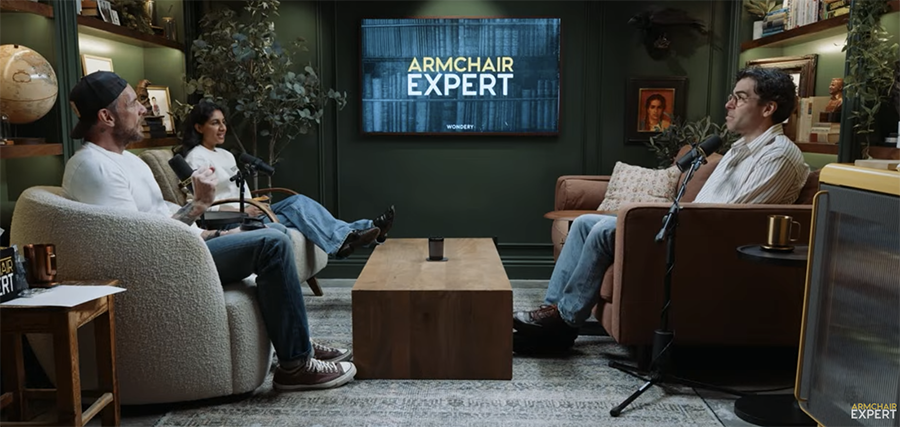
If you follow social media at all, Adam Mosseri's name should be on your radar. As the head of Instagram at Meta, he's sitting at the intersection of every conversation people are nervous about right now — AI, creator monetization, misinformation, and the rapid evolution of how we all communicate online. It's a lot to carry, and to his credit, he doesn't pretend otherwise.
His recent appearance on Armchair Expert is one of the more honest interviews you'll find from someone in his position. Host Dax Shepard pushes him on the hard stuff — and rather than retreating into corporate talking points, Mosseri actually engages. He admits Instagram has made mistakes. He talks openly about things that clearly don't have clean solutions yet. And he's candid enough to say "I don't know" when he doesn't know, which in this industry is rarer than it should be.
People aren't using Instagram the way you think.
Here's the one that tends to surprise people. Most of us picture Instagram as a feed of photos — square, polished, filtered. That was the product when it launched. But when Mosseri asks a crowd how many people posted a feed post that day, almost nobody raises their hand. When he asks how many people sent a DM, nearly everyone does.
More photos and videos are now shared privately in direct messages than are posted publicly to feed and stories combined. The platform most people have in their heads hasn't been the real Instagram for years.
That shift matters a lot for how creators and brands should be thinking about where their energy goes. The public post is increasingly just the top of the funnel. The conversation — and the conversion — is happening in DMs.
The grid might be going away.
Instagram is currently testing a new version of the app in India where you open directly into stories and swipe into Reels, with the traditional feed becoming a more optional, full-screen video experience. Mosseri is measured about it — it's a test, they're watching retention closely, and they won't move everyone over until the numbers justify it. But the direction is clear. Video is the product now, and the layout is catching up.
Authenticity is the new polish — and AI is already faking it.
One of the more interesting threads in the conversation is about aesthetic. The raw, imperfect, slightly chaotic content style that's been dominating — bad lighting, no edits, talking directly to camera — emerged as a counter to the over-produced Instagram aesthetic of a few years ago. People wanted real. And it worked because it felt human.
The problem, as Mosseri points out, is that AI is already learning to replicate it. The stutter, the breath, the off-center framing — these are becoming reproducible. Which raises a genuinely uncomfortable question: when imperfection can be manufactured at scale, what does authenticity actually mean? His answer is that taste, perspective, and genuine point of view become the last things that are hard to fake. That's not nothing, but it's a moving target.
Paying creators directly hasn't worked — yet.
YouTube is the gold standard for direct creator payouts, and Mosseri doesn't pretend otherwise. Instagram has run tests in the US, India, Japan, and Korea where they paid creators bonuses for posting. The results have been consistently disappointing — creators post more when they're paid, but the incremental content isn't as good, doesn't perform as well, and doesn't drive enough additional usage to justify the spend. Every test has lost money.
He's not giving up on it, but for now Instagram's creator monetization focus is on subscriptions and brand partnerships. The brand deal market alone is a $15 billion+ industry, and Instagram is building tools to help creators and brands find each other and transact more efficiently inside the platform.
AI content labels are harder than they sound.
Everyone wants a simple rule: label it if it's AI. But Mosseri walks through why that's genuinely complicated. Your iPhone is already using AI to brighten your face, smooth your skin, adjust for backlighting, and recreate the bokeh effect of an expensive camera lens. Is that AI-generated content? What about a photo where someone used Photoshop to remove a pimple? The edges of the definition are clear — a fully synthetic video of something that never happened is obviously AI. Everything in the middle is a spectrum with no obvious line.
His more practical long-term bet is on authenticating real content at the source — working with camera manufacturers to embed verified digital signatures in files at the moment of capture, so you can confirm something was actually filmed rather than trying to detect what was generated. It's an industry-wide problem that needs an industry-wide standard, and he's pushing for that rather than building something Instagram-specific that won't scale.
It's a long conversation and it covers a lot of ground. But if you're a creator, a marketer, or anyone trying to build an audience on social media right now, it's one of the more useful hours you'll spend this month.
Watch the full episode on Armchair Expert.
Frequently Asked Questions
What does Adam Mosseri say about where people actually spend time on Instagram?
Most people picture Instagram as a feed of photos, but Mosseri says that's not where people actually are. DMs dominate — more photos and videos are shared privately in direct messages than are posted publicly to feed and stories combined, especially among younger users.
Is Instagram planning to get rid of the grid?
Not exactly, but they are testing a new version of the app in India where users open to stories and swipe directly into Reels, with the feed becoming more of an opt-in full-screen video experience. Mosseri is clear it's a test and they're watching closely before rolling anything out broadly.
Why doesn't Instagram pay creators the way YouTube does?
Mosseri explains that every test they've run paying creators directly has lost money — the incremental content creators make when incentivized isn't better or more engaging, so it doesn't drive enough additional usage to justify the spend. His focus instead is on helping creators get paid through subscriptions and brand partnerships.
How does Instagram plan to handle AI-generated content?
Rather than trying to detect everything that's AI-generated — which he says is increasingly a losing arms race — Mosseri thinks the more practical long-term solution is authenticating real captured content at the camera level with a verified digital signature, so you know something was actually filmed rather than generated.
How does Stampede Social fit into the way people are actually using Instagram?
Mosseri's own data backs up what Stampede Social is built around — DMs are where the real engagement happens on Instagram. Tools that turn public comment activity into private one-on-one conversations are working with the grain of how the platform actually functions, not against it. If you're a creator or brand trying to convert social engagement into real results, the DM is where that conversion happens.